Explore Our Blogs
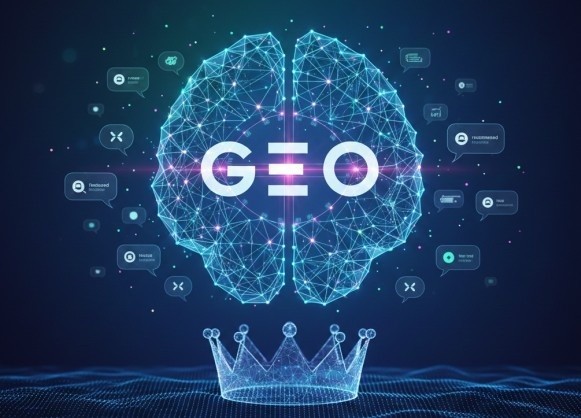
Generative Engine Optimization: How to Win AI Mentions
Generative Engine Optimization: How to Win AI Mentions
Digital discovery is entering a new phase. Instead of guiding users through lists of ranked webpages, many modern platforms now generate direct, conversational answers using artificial intelligence. This shift is gradually redefining how visibility, credibility, and authority are established online. Within this changing environment, a concept known as Generative Engine Optimization (GEO) has emerged as an important area of focus.
Generative Engine Optimization (GEO) is the practice of optimizing content to be cited as a trusted source in AI-powered, conversational search engines such as ChatGPT, Gemini, and Perplexity. Achieving this type of visibility generally depends on strong authority signals, structured information aligned with E-E-A-T principles, clear semantic language, and the ability to answer specific user questions directly. As AI-mediated information delivery expands, understanding GEO becomes increasingly relevant for organizations, educators, and publishers seeking long-term digital presence.
What Is Generative Engine Optimization?
Generative Engine Optimization refers to the structured preparation of digital content so artificial intelligence systems can accurately interpret, evaluate, and reference it while generating responses.
Traditional search engine optimization has historically emphasized:
Ranking position within search results
Growth of organic website traffic
Click-through performance from search listings
By contrast, GEO emphasizes:
Citation within AI-generated answers
Semantic clarity and contextual completeness
Demonstrated credibility across digital environments
This distinction reflects a broader movement away from navigation-based search toward answer-based knowledge delivery, where the reliability of information matters as much as its discoverability.
Why GEO Is Becoming Increasingly Relevant
Expansion of conversational search
Users are increasingly interacting with AI assistants to obtain explanations, summaries, and guidance without browsing multiple webpages. Visibility therefore depends not only on ranking performance but also on whether content is incorporated into generated responses.
Growth of zero-click information delivery
AI summaries, featured snippets, and instant explanations often resolve user intent immediately. In such cases, recognition as a trusted informational source becomes more significant than traditional traffic metrics.
Greater emphasis on credibility and expertise
Artificial intelligence systems evaluate signals related to authorship, trustworthiness, and topical consistency. As a result, clarity, authority, and reliability frequently carry more influence than isolated keyword targeting.
GEO and Traditional SEO: A Conceptual Comparison
Dimension | Traditional SEO | Generative Engine Optimization |
Primary objective | Ranking visibility | Citation within AI answers |
Core signals | Keywords and backlinks | Authority, semantics, structure |
User pathway | Click to website | Information delivered in response |
Long-term outcome | Traffic acquisition | Knowledge recognition and trust |
In practice, these approaches function best when combined, supporting both search visibility and AI-driven discoverability.
How AI Systems Select Referenced Sources
Artificial intelligence models synthesize information by evaluating multiple qualitative and contextual signals rather than relying solely on ranking factors.
Semantic completeness
Content that clearly defines, explains, and contextualizes a topic is easier for AI systems to summarize accurately.
Topical continuity
A collection of interconnected resources signals sustained expertise rather than isolated coverage.
Structured organization
Logical headings, consistent terminology, and coherent progression improve interpretability.
External credibility
Mentions across reputable platforms, scholarly discussions, or professional communities reinforce perceived trustworthiness.
Together, these characteristics influence whether information becomes part of an AI-generated explanation.
Approaches That Support AI Citation
Development of topical depth
Producing comprehensive, interconnected material across a subject area strengthens perceived expertise.
Use of precise semantic language
Direct explanations and contextual clarity improve understanding for both readers and machines.
Consistent entity identification
Clear association between authorship, organization, and subject matter assists recognition across platforms.
Structured data implementation
Schema markup and transparent authorship information contribute to interpretive confidence.
Broader digital presence
Participation in publications, expert discussions, or collaborative resources expands credibility beyond a single website.
Readable informational structure
Definitions, stepwise reasoning, and concise summaries align closely with common AI response formats.
Content Structuring Considerations in GEO
Effective GEO-aligned content often follows a logical informational pattern:
Immediate conceptual definition to establish relevance
Hierarchical expansion through clearly structured sections
Contextual examples or applications to support understanding
Focused explanatory responses that mirror user intent
Such organization enhances usability while also supporting accurate machine interpretation.
Common Limitations in Early GEO Adoption
Some digital strategies remain closely tied to earlier optimization models.
Common challenges include:
Excessive keyword repetition without conceptual depth
Fragmented or minimal topic coverage
Limited demonstration of expertise or authorship transparency
Disorganized structural formatting
Addressing these limitations is often necessary before meaningful AI citation becomes possible.
Anticipated Direction of AI-Mediated Discovery
Generative interfaces are expected to expand across search engines, productivity tools, and conversational platforms. As this evolution continues, recognition within synthesized knowledge may become as influential as traditional ranking visibility.
Organizations that prioritize semantic clarity, credible expertise, and structured communication are likely to adapt more effectively to this changing environment. GEO therefore represents not only a technical refinement but also a broader shift toward information quality as the foundation of discoverability.
Conclusion
Generative Engine Optimization reflects an ongoing transformation in how digital knowledge is located, interpreted, and delivered. Rather than focusing solely on ranking mechanics, GEO emphasizes clarity of meaning, demonstrable authority, and structural transparency.
As AI-driven discovery continues to mature, the ability to provide trustworthy and well-organized information may increasingly determine long-term visibility. Understanding GEO is therefore less about short-term optimization and more about adapting to a future where credible knowledge becomes the primary path to discoverability.
Learn More About GEO and AI-Driven Search
To explore how AI-powered discovery is evolving and what it may mean for digital visibility, you can visit Scaling High Technologies for additional insights, research perspectives, and practical guidance related to Generative Engine Optimization and emerging search behavior.
Explore More Insights on SEO, Design, and Digital Growth
Why Image Compression Matters for SEO & Website Speed: Learn how optimized images improve performance, rankings, and user experience.
Google February 2026 Discover Core Update Explained: Understand the latest algorithm changes and what they mean for your visibility.
Why Headings Matter for SEO, Content, and Readability: Discover how proper structure improves both search rankings and user engagement.
Graphic Design vs UI/UX Design: Key Differences: A clear comparison to help you choose the right design approach for your project.
What Is Schema Markup and How to Add It to Your Site: A simple guide to structured data and better search engine understanding.
Other Blogs
Your Complete Digital Solution
SEO, Stunning Websites, & Creative Designs
All in One Place
Ready to take the next step? Join us now and start transforming your vision into reality with with expert SEO, web development, and graphic design services.