Explore Our Blogs
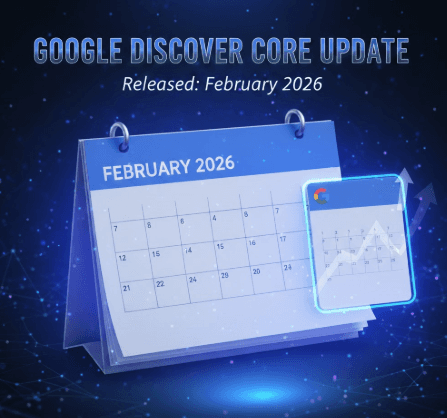
Google February 2026 Discover Core Update
Google February 2026 Discover Core Update
Google has started the first major algorithm change of 2026, and this time the focus is not traditional search results. The spotlight is on Google Discover, the personalized feed that sends massive traffic to blogs, news sites, and niche websites without users even searching.
Early signals show strong movement in Discover impressions. Some publishers are seeing sudden drops, while others are gaining unexpected visibility. This shift is connected to the broader Google Core Update February 2026, which highlights how Google is refining trust, relevance, and real usefulness across its ecosystem.
For website owners, this is not just another routine update. It is a clear message that Discover traffic in 2026 will depend more on credibility, freshness, and topic expertise than ever before.
Why This Discover Focused Update Is Different
Most core updates affect search, news, images, and Discover together. This rollout is unusual because it specifically targets how content appears inside Discover feeds.
That means your search rankings might stay stable while Discover traffic changes dramatically. Many publishers miss this difference and assume nothing has happened, even when their Discover visibility drops.
Google describes the change as a broad improvement designed to show users more useful and trustworthy content. The system is becoming better at understanding which websites truly help readers and which ones only try to attract clicks.
The Three Big Changes Shaping Discover in 2026
Google has clarified the main goals behind the February 2026 Discover core update. Each goal points toward higher quality content and stronger user trust.
Local relevance is becoming more important
Discover is now prioritizing content that is closely connected to the reader’s country and context. Websites based in the same region have a stronger chance of appearing in the feed.
This may reduce visibility for international publishers targeting foreign audiences, but it can improve reach within their own local markets over time. The change shows how Google is moving toward more personalized information delivery.
Clickbait and exaggeration are being pushed out
Misleading headlines and emotional manipulation are losing power. Google wants previews that clearly explain what the content is about instead of hiding information to increase curiosity.
To stay safe, publishers should:
Write honest headlines that match the real topic
Avoid emotional exaggeration or shock style wording
Share key information clearly instead of hiding it
Use preview images that truly represent the content
Authenticity is now a stronger ranking signal than artificial engagement tricks.
Depth originality and freshness matter more than ever
Google is giving priority to content that provides real insight, updated information, and clear expertise in a topic. Importantly, expertise is measured at the topic level, not the whole website.
A site that consistently publishes strong content in one subject area can perform well, even if it covers other topics too. But a single random article rarely builds authority. This makes topical focus essential for Discover success.
Why Discover Traffic Matters More Than Traditional SEO
In recent years, Discover has quietly become one of the biggest traffic sources for content websites. A single strong Discover appearance can send thousands of visitors in hours.
Because Discover works without search queries, Google depends heavily on trust signals, usefulness, and reader engagement. This changes the definition of SEO success.
Strong long term signals now include:
Clear topical authority instead of random posting
Original insight rather than rewritten summaries
High engagement such as reading time and scrolling
Clean structure and trustworthy presentation
Websites that build these signals are more likely to win future visibility across Discover and AI driven search.
Practical Steps to Protect and Grow Your Traffic
Publishers adapting successfully are focusing on real value instead of quick tricks. Honest headlines reduce clickbait risk. Timely analysis improves recommendation chances. Consistent topic coverage builds expertise in Google’s eyes.
User experience also plays a major role. High quality images, fast loading pages, and simple readable design all support engagement signals that influence Discover visibility.
These improvements match Google’s public guidance for appearing in Discover more often.
The Future of Discover and AI Driven Visibility
This update is part of a bigger shift. Google is moving toward recommendation based search powered by AI understanding and trusted sources.
In the future, visibility will depend less on keywords alone and more on credibility, structure, and meaningful expertise. Websites that continuously publish helpful, original, and fresh content will stay ahead as search evolves.
Conclusion
The February update focused on Discover confirms a clear direction toward authenticity, relevance, and real user value. Short term fluctuations are normal, but long term success will belong to websites that provide trustworthy knowledge and consistent topical expertise.
As this rollout continues over the coming weeks, staying informed is essential for protecting traffic and keeping your business stable. Keep following Scaling High Technologies to understand upcoming impacts, track Discover trends, and make smart adjustments so your online growth remains strong and balanced in the changing search landscape.
Related Reads to Stay Ahead in SEO and AI
SEO in 2026: Why It Is No Longer a Google Only Game: Discover how SEO is expanding beyond traditional search and what truly matters for ranking in 2026.
Google December 2025 Core Update: Understand the final major algorithm shift before 2026 and how it shaped current search visibility.
Google Tests Blue Send Button Replacing AI Mode Feature Live: Explore Google’s latest AI interface experiment and what it signals for future user interaction.
How AI Is Transforming Web Development in 2026: See how artificial intelligence is reshaping modern websites, performance, and development workflows.
Difference Between Graphic Design and UI UX Design: Learn the key design differences that directly influence usability, branding, and conversions.
Other Blogs
Your Complete Digital Solution
SEO, Stunning Websites, & Creative Designs
All in One Place
Ready to take the next step? Join us now and start transforming your vision into reality with with expert SEO, web development, and graphic design services.